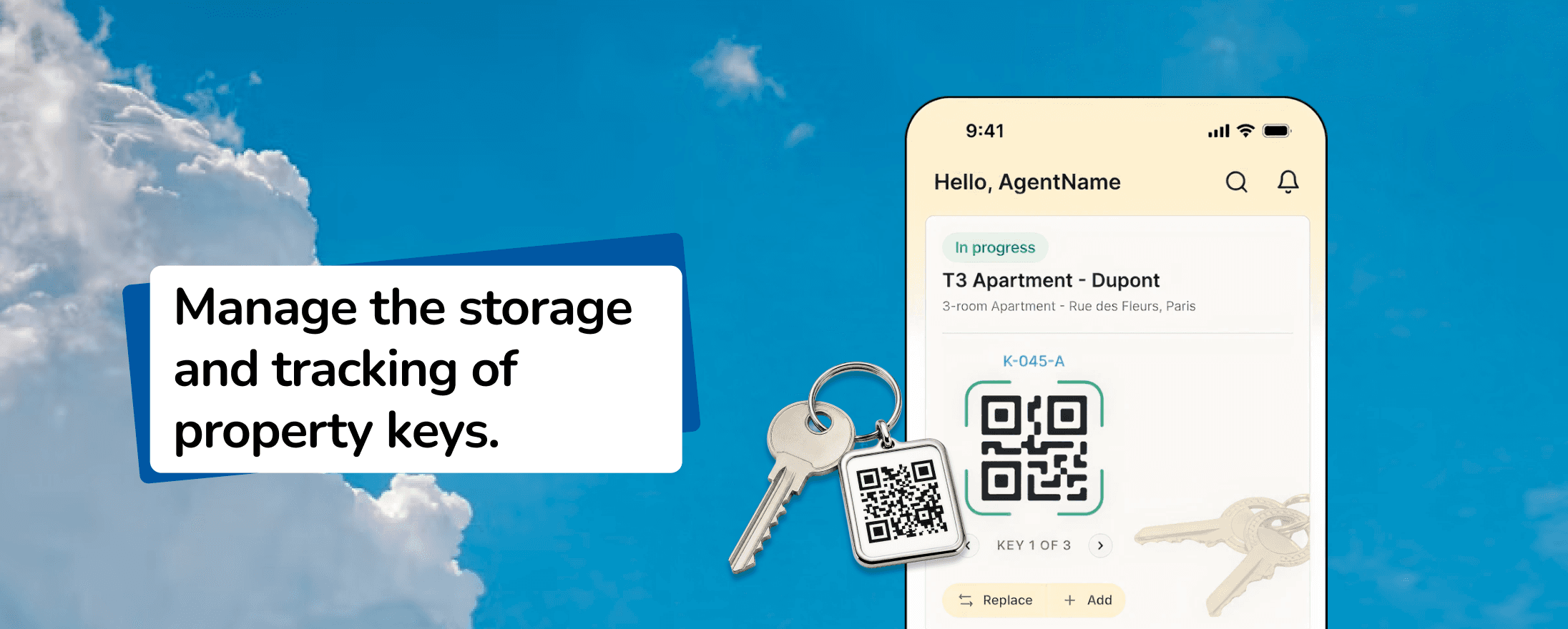
APPLICATION MOBILE / 2025
A B2B mobile platform that gives real estate agencies and car dealerships complete visibility and control over physical key movement — replacing manual logs with verifiable, auditable handovers.
MY ROLE
Founding Product Design
TEAM
1 Product Designer work with PM, Engineers
PLATFORM
App Mobile
TIMELINE
3 Months
CONTEXT
One platform. One brand. Two industries. Two user types
Agents manage keys across dozens of active listings, but there's no reliable way to know who's holding which key, or when it was last checked out.
Test-drive keys pass through multiple sales staff every day, but staff and managers don't know the log of who signed one out, or when it came back.
iOS & Android mobile app which simplified for Agents and clients
The Real Problem
Staff had no idea where keys were at any given moment. Paper logs. Excel sheets. Or nothing at all.
When incidents happened: missing key, disputed responsibility, unauthorised access; there was no reliable audit trail.
Kee was built to change exactly that. Not just to digitise a process, but to replace personal trust with controlled, verifiable process.
No way to trace location or last holder
Problem 2
No audit trail to resolve incidents
Unauthorised Access
No alerts or access controls in place
Each user type. each pain point to solve

Field Agents/Managers
Can't trace which key is where, with whom, since when
No standardised check-in/check-out process
No way to update status when offline or in the field

Clients
Risk of lost keys, unauthorised copies, uncontrolled access
No operational data to optimise workflows
Liability exposure with no documentation
Design Challenge

The QR Code as Central Object
The brief was explicit: the QR Code is the central object of the app — not a supporting feature. Every design decision radiated outward from this single interaction.
Scanner sits at the centre of the bottom navigation. Not a coincidence. All other features (history, registration, cloud sync) serve this flow, not compete with it. Three steps. No reading required. No searching. A field agent can complete a handover in under ten seconds.
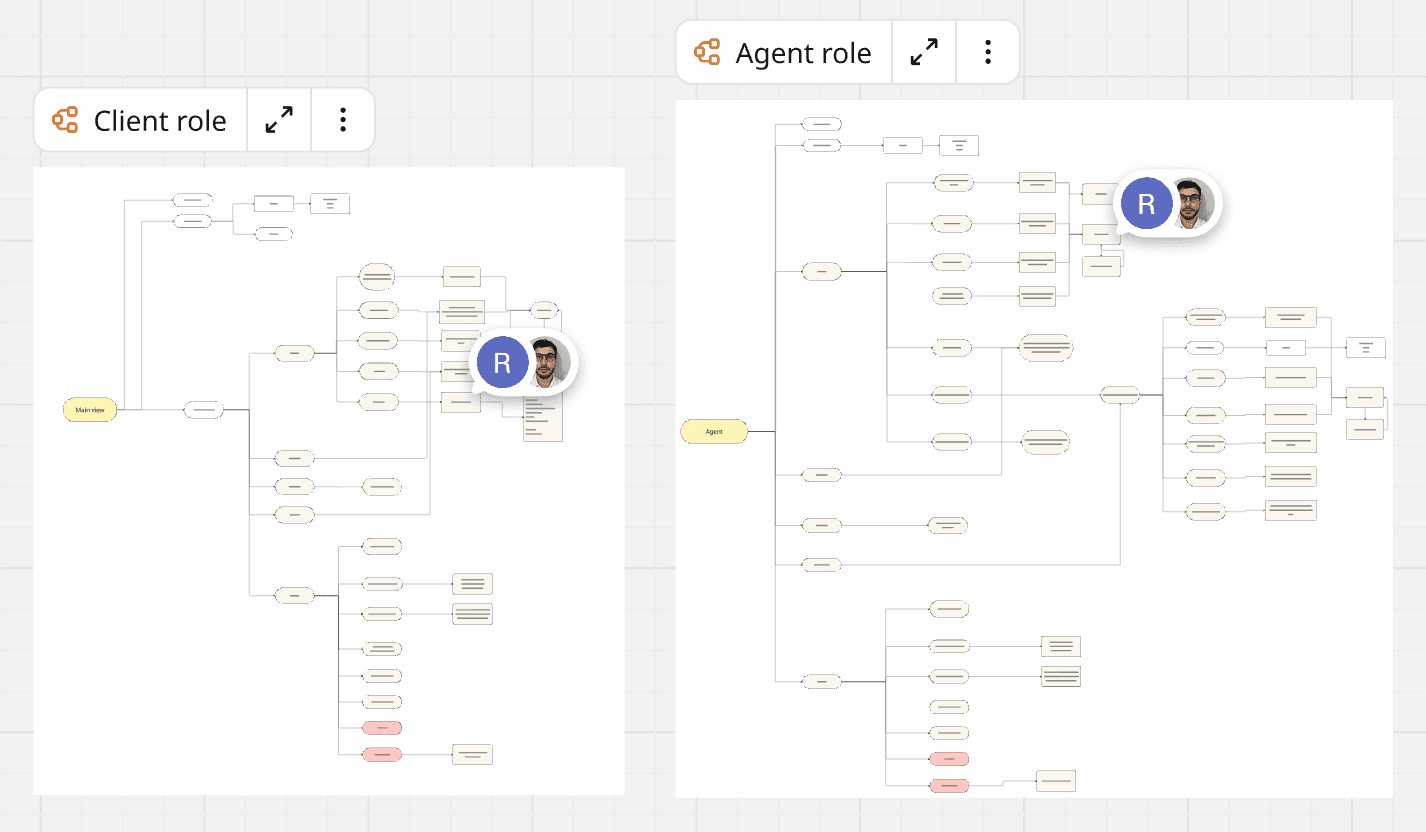
Created UX flows for two user types and handled UX writing in French.
SOLUTION DIRECTION
SCAN - TRUST - CONTROL
I delve deeply into three key terms that are essential to creating effective, methodical products.
Effective security relies on the ability to scan, trust verified sources, and maintain control over access and data.
THE SOLUTION
The final design brought to life a clean, intuitive, and highly functional product with a golden key aesthetic. Centering the QR code as the core element, we focused on maximizing ease of scanning and confirmation, while ensuring the most critical information was presented for immediate realization. Additionally, we enabled users to manage their property keys seamlessly.
AGENTS - CLIENTS
Scan & Sign
The access provisioning process is initiated when a user scans the QR code associated with a physical key. This action triggers a mandatory confirmation workflow, which requires the user to sign for verifying and formally approving the key's associated details. This verification includes reconfirming critical information such as the property name, key type, physical address, and the designated property owner.
This final step ensures security and data accuracy before access is fully granted.

Agents create & manage
Authorized agents are responsible for creating and managing property and key profiles within the system. Upon being granted access permissions, their capabilities include:
Property and Key Creation: Initiating and populating new digital records for properties and their associated keys.
Profile Management: Overseeing and maintaining the accuracy of all information within these profiles after their creation.

Clients access & check
All clients who request a property transfer or rental will be invited to utilize our dedicated application. Through this platform, they will be able to securely check in keys, manage their custody, and perform a formal check-out, ensuring all procedures are completed within the designated timelines. This integrated system streamlines the entire process, enhancing both security and efficiency.

Delivery Outcomes
Brought into life the end-to-end development and ongoing maintenance of a multi-role application within a broader ecosystem. A key achievement was architecting a system that translated these inherently complex operational procedures into a streamlined, modular experience. This was accomplished by implementing a simplified activation framework, which significantly enhanced usability and efficiency for users during critical operations.
7+
Core User Flows
for both roles
120+
Screens Delivered
hi-fi, dev-ready
What I learned from this project
Design for ecosystem
Designing at ecosystem level taught me to hold multiple perspectives at once — not just one user, but every role that touches the system. Mapping how different users navigate, interact, and rely on the same product changed how I think about structure. A decision that works for one role can quietly break the experience for another.
UX Design for another language except of English
Work in English first and switch to French, this was the task when I shipped updates to my clients. It was a interesting experience and a chance for me to explore a new language
Special Thanks

" height="97.47829808315818px" id="hBxZIFJDa" transform="translate(0.292 0.038)" width="97.4927695368421px"/><path d="M 37.172 18.587 C 37.172 22.887 35.681 27.054 32.953 30.378 C 30.225 33.702 26.429 35.977 22.211 36.816 C 17.994 37.654 13.616 37.004 9.824 34.977 C 6.031 32.95 3.059 29.67 1.414 25.697 C -0.231 21.724 -0.448 17.304 0.801 13.189 C 2.05 9.074 4.686 5.52 8.262 3.131 C 11.838 0.743 16.131 -0.332 20.41 0.09 C 24.69 0.512 28.69 2.405 31.731 5.446 C 33.459 7.17 34.829 9.218 35.763 11.473 C 36.697 13.728 37.176 16.146 37.172 18.587 Z" fill="rgb(255, 158, 145)" height="37.17241379310424px" id="t0VVv_9Kk" transform="translate(30.042 30.046)" width="37.17241379310336px"/></svg>)